Pig breeding strategies have long focused on increasing litter sizes and reducing piglet mortality, but further improvements are essential to productivity. Dietary supplements like biotics, ranging from probiotics to postbiotics, are increasingly explored for this purpose.
Extensive research on dietary interventions has been conducted regarding sow performance and healthy piglets. A recent meta-analysis published by ADM researchers highlights the efficacy of feeding sows with inactivated Pichia guilliermondii yeast postbiotic (PG).
This analysis provides compelling evidence that integrating PG into sow diets can boost reproductive outcomes and progeny growth performance, addressing key challenges in swine production.
Key Findings from the Meta-Analysis
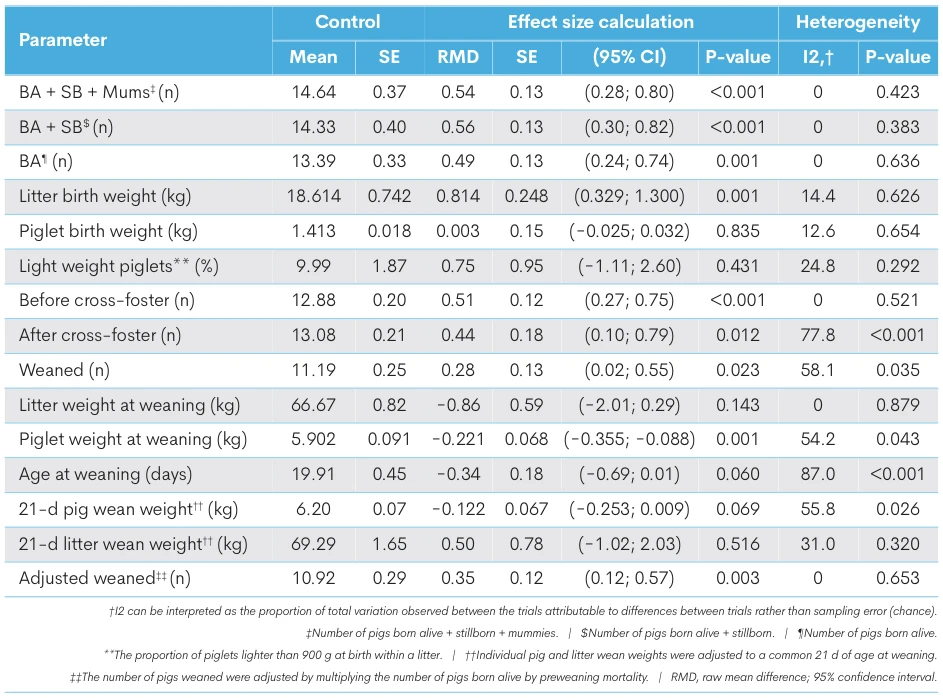
The meta-analysis combines data from seven trials focused on sow reproductive and litter performance and eight trials analysing piglet growth after weaning (Tables 1 and 2).
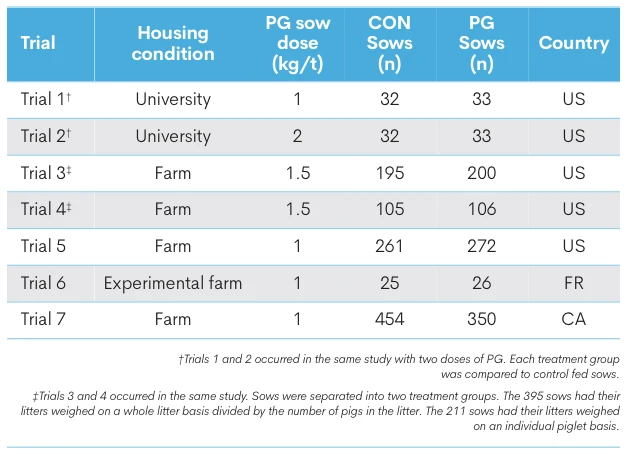
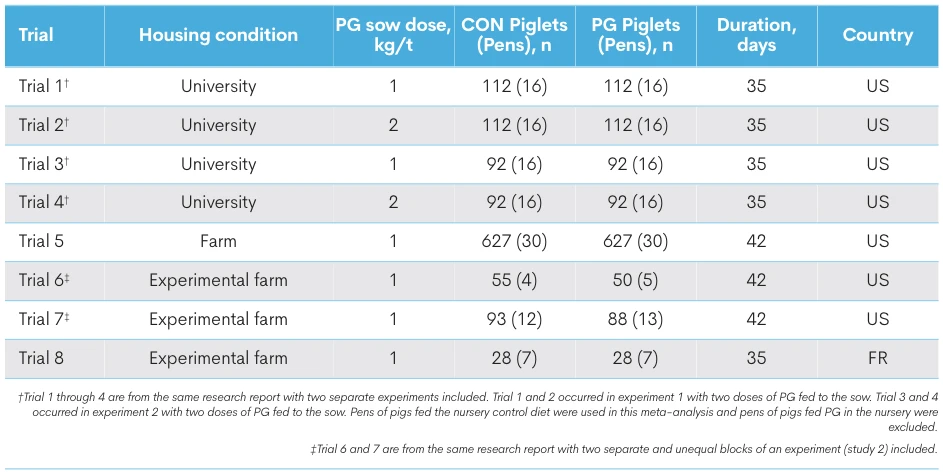
These trials were selected through a systematic review process, ensuring that only high-quality randomised trials with appropriate controls were included. By using effect size calculations, the meta-analysis provided robust insights into how feeding sows with PG during gestation and lactation influenced outcomes such as litter size, weaning weight and post-weaning piglet growth.
1. Increased Litter Size at Birth: Sows supplemented with PG exhibited higher fertility, with 0.49 more piglets born alive compared to control groups (P<0.001). This improvement in litter size included both live and stillborn piglets, as well as those classified as mummies (see Fig. 1).
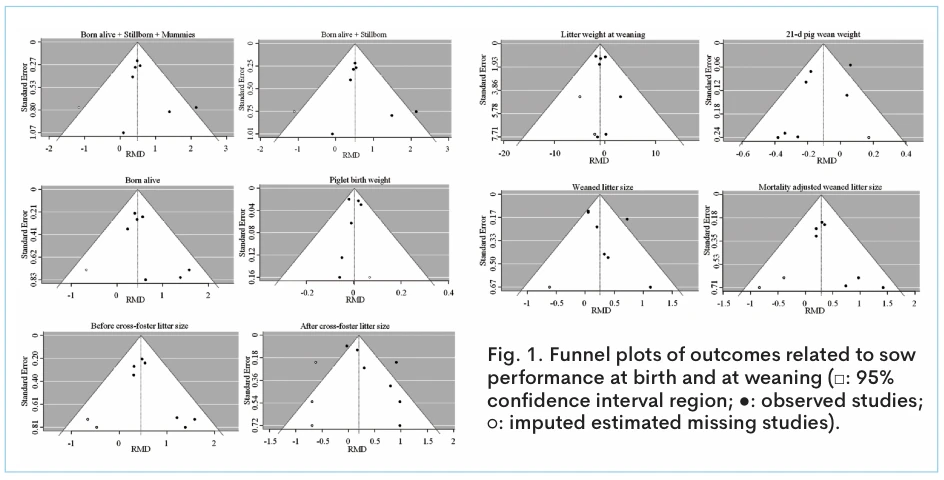
2. Consistent Birth Weights: While PG supplementation did not affect individual piglet birth weight (P=0.835), the overall litter birth weight increased by 814g, highlighting improved sow reproductive performance. This suggests that PG enhances litter outcomes without compromising individual piglet development.
3. Improved Weaning Outcomes: PG-fed sows weaned 0.28 more piglets per litter than control sows (P<0.023). Piglets born from PG-fed sows tended to be weaned 0.34 d younger than those from CON-fed sows (P=0.060). Twenty-one-day adjusted pig weight at weaning tended to be lighter by 0.122 kg in the PG sow group (P=0.069); however, litter weight at weaning adjusted to 21 d remained similar across groups (P=0.516). We can then note that this means sows can maintain the acceptable weight gains of the extra pigs they produce through PG supplementation. (Table 3)
4. Progeny Growth Post-Weaning: The benefits of PG supplementation extended beyond weaning. Piglets born to PG-fed sows showed an 18.9 g/day improvement in average daily gain (ADG) during the nursery phase (P = 0.030). This carryover effect supports the hypothesis that early nutritional interventions in sows can have long-lasting impacts on offspring performance. (Table 4).
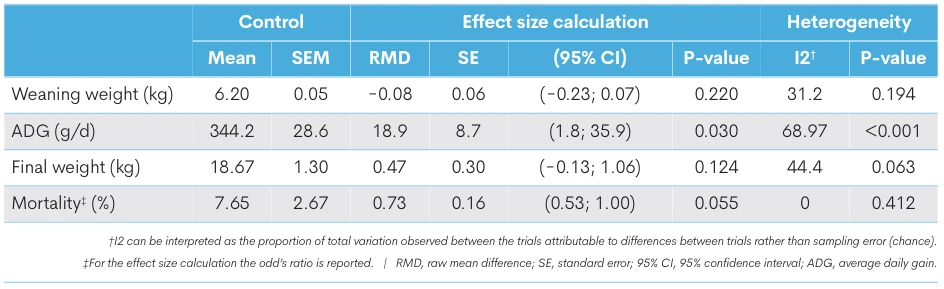
5. Reduced Piglet Mortality: Piglets from PG-supplemented sows tended to experience lower mortality rates post-weaning, with a 27% reduction in piglet mortality (P = 0.055), suggesting that the immune-boosting properties of PG, such as its ability to activate immune responses via N-linked mannans, may contribute to better survival rates.
Mechanisms Behind Successful PG Supplementation
One potential explanation for PG’s benefits lies in its immune-modulating properties. Internal ADM trials have shown that heat-inactivated Pichia guilliermondii yeast can activate cytokine production, particularly interleukin-6 (IL-6), which plays a key role in immune system regulation. This immune system activation could enhance the resilience of piglets, both before and after weaning. Additionally, the concept of foetal imprinting may explain the improved post-weaning performance.
Feeding PG to sows during gestation could influence the development of foetal immune and digestive systems, leading to stronger, more robust piglets. This effect is likely driven by changes in the maternal immune environment that positively impact foetal development. The findings from this meta-analysis are highly relevant for swine producers attempting to enhance reproductive efficiency and piglet performance. The increase in litter size, combined with reduced piglet mortality and improved post-weaning growth, offers a clear economic advantage. Producers can expect more piglets per litter, with a higher likelihood of survival and improved growth rates after weaning—all of which contribute to improved overall productivity. Additionally, the study’s results suggest that the benefits of PG may extend beyond the immediate reproductive cycle.
The improved growth performance of progeny post-weaning points to a possible foetal imprinting effect, where nutritional interventions during gestation have long-lasting impacts on piglet health and performance.
About the Authors:
Dr. Morgan Thayer earned her B.S. at Purdue University in Animal Sciences, M.S. at Kansas State University in Swine Nutrition, and Ph.D. at Purdue University in Swine Nutrition. Her Ph.D. research focused on gut modifying feed additives fed to sows and nursery pigs.
Morgan graduated with her Ph.D. in 2021 and directly transitioned into her current role at ADM as a Swine Technical Services Manager. She enjoys being involved with continued research of feed additives and supporting the sales team during key customer interactions.
Clementine Oguey is a Global Product Specialist and Lead for New Solutions and Sustainability for the feed additives range offered by ADM’s animal nutrition business. She holds a Master of Science in Agrofood and Health from Unilasalle in France. Clementine joined Pancosma in 2006 (acquired by ADM in 2019) and has held a variety of roles in R&D, product development, technical support, and business development. She has been working with a broad range of additives categories applied to animal performance, gut health prevention, immune support and metabolic modulation as well as mycotoxins solutions.