Weaning has always been one of the most challenging periods of swine production; however, with many countries having banned therapeutic zinc oxide and prophylactic antibiotics, the options for maintaining optimal health and performance are limited.
The high stress of being separated from the sow at weaning, coupled with an immature immune system and exposure to both a novel environment and piglets from other litters, has been widely shown to increase the occurrence of enteric disease. Historically, weaning diarrhoea has been successfully managed with the use of antimicrobials (either zinc oxide or various antibiotics); however, with increasing concerns surrounding antimicrobial resistance, the industry is having to identify and implement alternative strategies.
Organic acids
Organic acids are compounds containing carbon comprised of short- and medium-chain fatty acids. Organic acids have been widely proven to have extensive antibacterial and antiviral properties.
It has been found that blends of organic acids have greater efficacy against a wider range of pathogens than single acids alone. However, how the acid is delivered plays an essential role in its efficacy. Organic acids for feed tend to come in four forms. Liquid acids are probably the most basic. Liquid acids tend to be very strong and therefore can cause significant corrosion both within the feed mill and within feed storage and feeding equipment, requiring equipment to be replaced more regularly than normal.
Within the animal, liquid acids are used very rapidly in the upper digestive tract, and as such, most of the benefit will be found in mitigating pathogens in the feed and little benefit will be seen in the intestinal tract. Acid salts are less strong and therefore safer to handle; however, within the animal, they have to reach the acid environment of the stomach to be released. Therefore, no pathogen mitigation will occur in the feed, and pathogen control in the gut can only occur in the mid and hindgut.
Encapsulated acids
Encapsulated acids are organic acids that are typically coated with a lipid- or protein-based coating. Again, these are safer to handle and less corrosive for equipment; however, there will be no pathogen control in the feed, and for the animal to access the acids, they need to have sufficient production of lipid- or protein-degrading enzymes to break down the encapsulation and access the acids. Unfortunately, it has been well-proven that young and sick animals have very low levels of endogenous enzyme production, so in these animals, encapsulated acids will be simply excreted. The final form of acids on the market are acids placed on a mineral carrier, such as Anpario’s acid-based eubiotics, including Salkil, pHorce and Genex products.
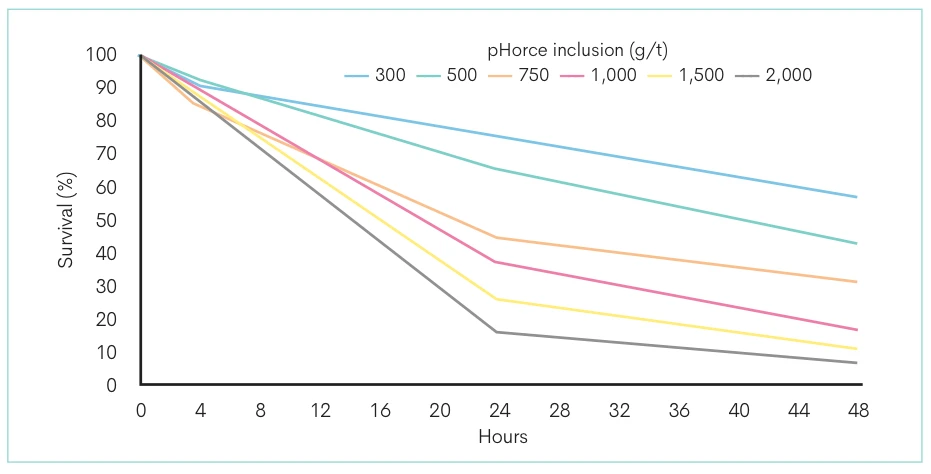
Here, liquid acids are placed on a mineral carrier. As the carrier makes contact with the feed, it has been scientifically proven to mitigate pathogens such as salmonella, Campylobacter, PPRS, PEDV and Seneca Valley virus (Fig. 1).
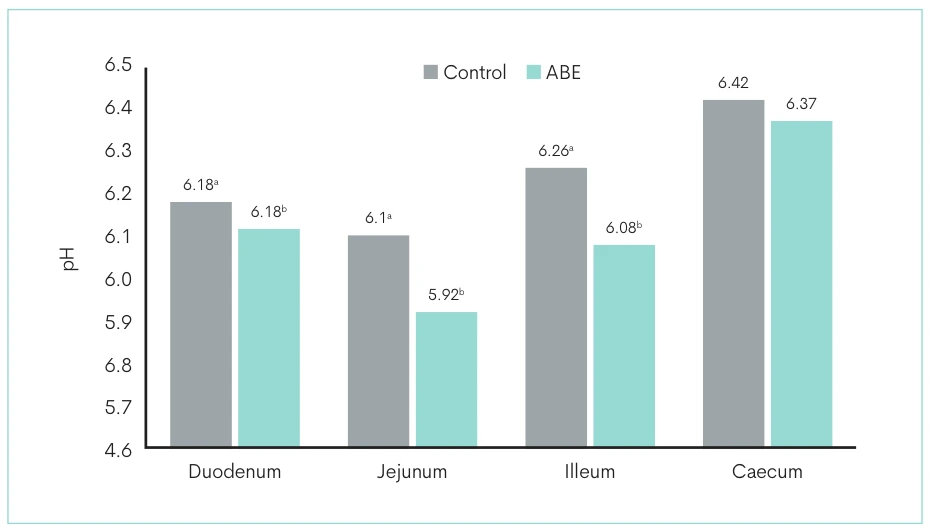
As the product is consumed by the animal, the complex carrier slowly releases the absorbed acids to ensure they reach the entire intestinal tract (Fig. 2).
By offering effective protection in both the feed and the animal, Anpario’s acid-based eubiotics eliminate the need to apply both a feed mitigant and a gut health improver in the animal by supplying the same benefits in one easy-to-apply, safe and effective product.
Trial Design
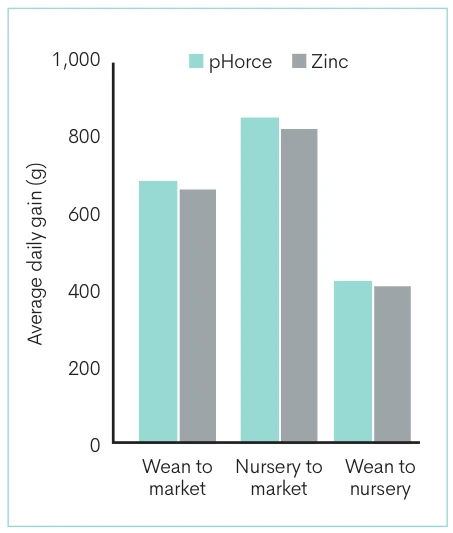
To demonstrate the effect of Anpario’s acid-based eubiotics, a scientific study was performed in collaboration with Suidae Research in the USA. The study compared a standard inclusion of zinc oxide (3000, 20000, 1500ppm) to pHorce (3, 2, 1kg/t) in a PRRS-positive herd. Some 665 piglets were raised from wean to market, with body weights and mortality assessed throughout. The results of the study found that the application of pHorce resulted in increased average daily gain compared to zinc oxide in all periods (Fig. 3), with the pHorce group weighing on average 2.5kg more than the zinc group at the end of the study.
The pHorce group also experienced a 3% reduction in overall mortality compared to the zinc group, despite the PRRS 1-4-4 L1C variant being confirmed in both groups (Fig. 4).
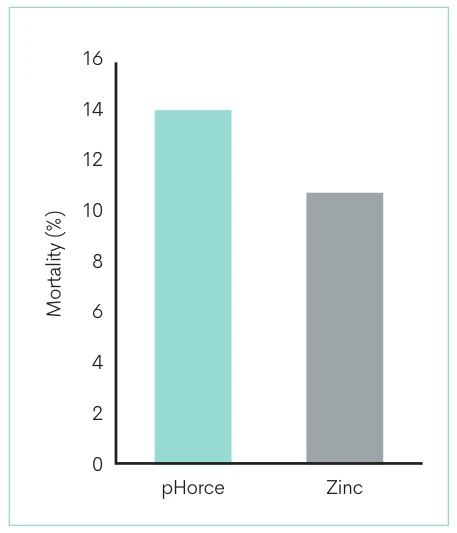
The results of the study demonstrate that pHorce is an effective alternative to zinc oxide, offering performance benefits beyond those achieved with zinc. Likewise, despite the PRRS challenge, mortality was substantially reduced when pHorce was applied, which, in addition to the increased body weights achieved, suggests that pHorce offers a substantial improvement in overall profitability.
References are available from the authors on request