
Necrotic enteritis (NE), caused by toxins produced by Clostridium perfringens, is one of the most common and costly diseases that affect the poultry industry. Recent research in broiler nutrition has unveiled the critical importance of managing microbial loads in broiler breeder feed, highlighting its profound impact on eggshell contamination, hen mortality and chick quality. Additionally, ongoing investigations into the benefits of clean feed on broilers facing challenges such as NE suggest that early intervention with sanitised feed could significantly enhance overall gut health, enabling broilers to better withstand disease pressures and achieve improved performance.
Understanding the Role of Feed in Pathogen Transmission
Quality feed is the primary vehicle for delivering nutrients to developing poultry, but feed also poses a significant risk as a carrier of pathogens. For example, in the US, a surveillance study from 2002 to 2009 reported a 12.5% Salmonella contamination rate of feed and feed ingredient samples from manufacturing facilities. Other notable evidence includes a survey that reported the presence of pathogens in various feed ingredients, finding that 0.7% of animal-derived proteins, 2.2% of oilseed meals, and 1.3% of cereal grain samples tested were positive for Salmonella. Salmonella in soybean meal and rapeseed meal samples was also found at varying rates. In a recent report, conducted a year-long study across five mills, discovering a high incidence of Clostridium spp. and detecting E. coli in sampled ingredients and finished feeds. Elevated microbial loads in feed are strongly correlated with increased pathogen prevalence, which poses a threat to poultry health and productivity. Analysis of thousands of feed and feed ingredient samples collected worldwide and tested by Anitox’s Laboratory reveals the variability in microbial profiles among different feed types and ingredients, with animal by-products, vegetable proteins, and cereal grains being particularly susceptible to contamination.
Various factors, including ingredients, particle size, pathogens, and environmental contaminants, influence the microorganisms found in poultry feed. These microbial pathogens, in turn, can impact the development of the poultry microbiota and immune system. Pathogens, such as Salmonella, present in contaminated feed can enter the poultry gastrointestinal tract (GIT) upon consumption and potentially colonise it, with increased susceptibility in young, developing birds. Aside from the hatchery environment, feed is one of the first things a chick encounters post-hatch, and its nutritional and microbial quality has a significant impact on initial gut health. Early introduction and colonisation of pathogenic microorganisms in the avian gastrointestinal tract can disrupt the delicate balance of the gut microbiota and impede the establishment of healthy microflora. This imbalance not only compromises intestinal integrity but also predisposes birds to various health issues, including decreased growth rates and increased susceptibility to diseases like NE.
Feed sanitation benefits broiler health and performance.
A recent study which was conducted in collaboration with the Poultry Science department at the University of Georgia, explored the effects of reducing feed microbial loads on broiler breeder performance and progeny quality. During this study, broiler breeder hens were subjected to either a control diet or a diet treated with a feed sanitiser from weeks 25 to 60 of their life cycle (Fig. 1).

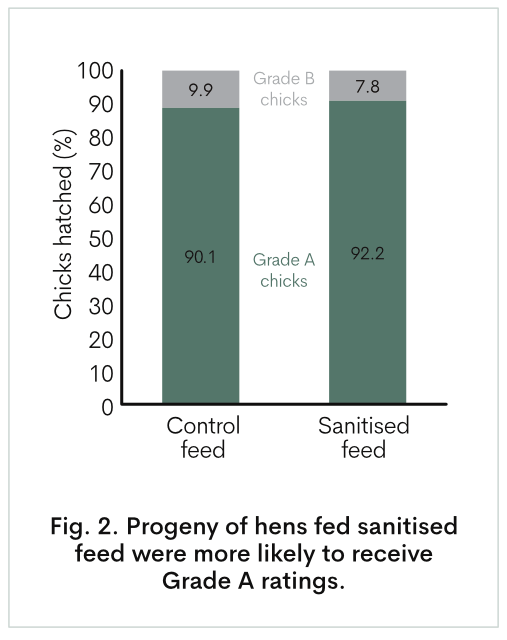
Results indicated that decreasing feed microbial loads not only improved hen mortality but also positively impacted the offspring of hens fed a sanitised diet. Furthermore, hens consuming sanitised feed produced a higher percentage of “Grade A” chicks (Fig. 2).
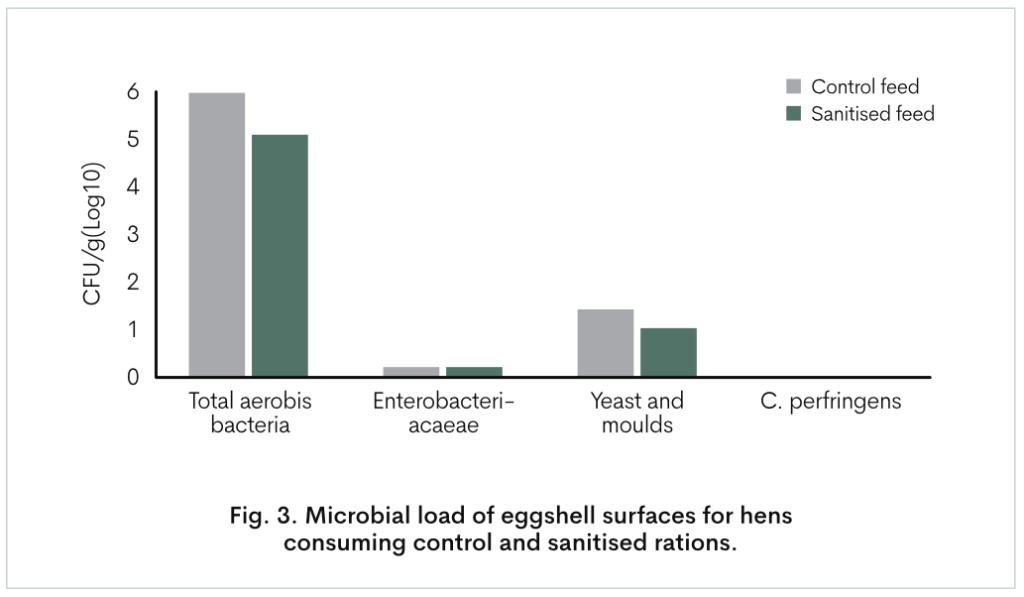
Reduced microbial loads on eggshell surfaces resulting from these same hens may have contributed to improved chick health post-hatch, as suggested by the observed reduction in 7-day mortality rates, particularly from the progeny of hens in late lay (Fig. 3).
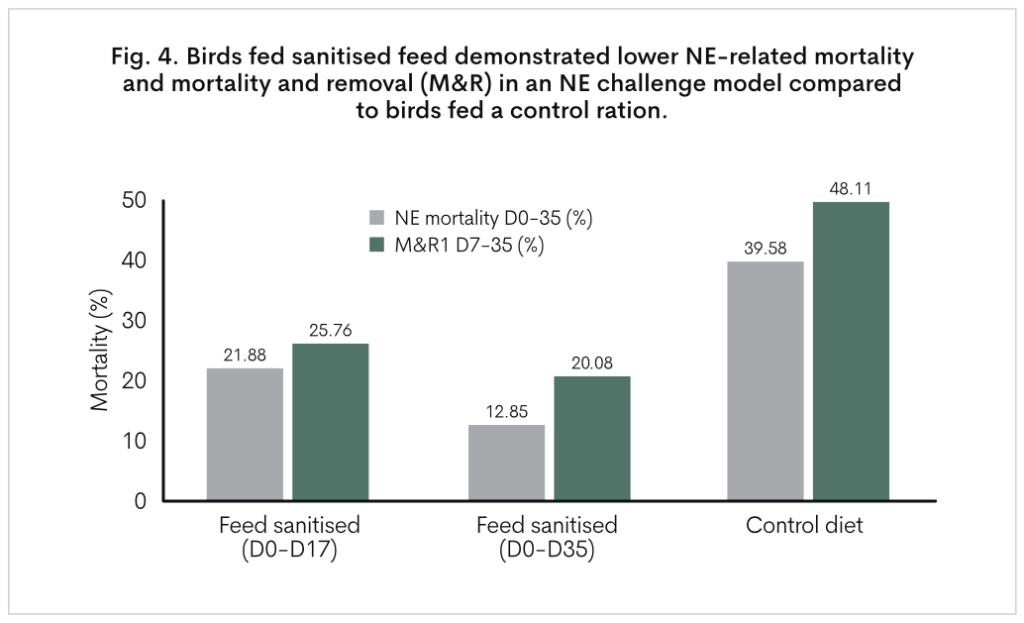
Further research, conducted in collaboration with Colorado Quality Research, suggests that early intervention with feed sanitisers during the first two weeks of life can enhance broilers’ resilience against NE challenges. Broilers consuming sanitised feed demonstrated lower NE-specific lesion scoring, reduced oocyst shedding, and improved overall performance compared to those fed untreated diets. Additionally, they exhibited lower NE-related mortality and reduced mortality from day 7 to day 35, underscoring the importance of early-life nutrition in disease prevention (Fig. 4).
Managing microbial loads and reducing pathogen introduction during the early broiler life stages can have profound implications for lifetime health, growth, and performance. Feed sanitisers, applied at low inclusion rates, effectively reduced feed microbial loads and provided long-term protection against recontamination. By mitigating the risks of pathogen colonisation and dysbiosis, feed sanitisers empower producers to optimise broiler health and productivity, ensuring the delivery of high-quality poultry products to meet consumer demands.
Prioritising strategies to control microbial loads in broiler feed, especially during critical developmental windows, represents a proactive approach to promoting broiler health and performance. Continued research efforts aimed at understanding the mechanisms and long-term impacts of feed sanitisation will further enhance our ability to safeguard poultry health and welfare in the face of evolving challenges. Reducing microbial loads in feed is crucial for maintaining optimal broiler health and performance.
References are available from the author on request
