It is well known that the conditions experienced early in life can influence the long-term health of an animal, modulating their development, physiology, behaviour, resilience and vulnerability to disease. Critical developmental windows start in gestation and lactation and progress through to early postnatal life. Strategic nutritional solutions at these key stages can positively impact the developmental trajectory of the animals and their lifetime health and performance. This report outlines key nutritional challenges related to early-life nutrition and highlights innovative solutions and services that can support young production animals to achieve their full genetic potential.

CHALLENGE 1
Gestation and lactation
A developing foetus responds to stimuli or changes in the maternal environment, conveyed via the placenta in mammals. This, in turn, can alter the genetic expression of the offspring, with possible long-term effects on their health and development. Influences that have the potential to programme the foetus – positively or negatively – include nutrition, medication and vaccines, pathogens, toxins and stress. Upon birth, the main source of nutrition for young swine normally comes from the mother’s milk, which contains vital nutrients and passive immune factors for their offspring. Both gestation and lactation are energetically expensive processes, meaning the health and nutritional status of the maternal environment are critical.
Solution spotlight: CitriStim, ADM’s proprietary inactivated yeast product
CitriStim is a truly unique whole-cell inactivated yeast (Pichia guilliermondii) product beneficial in the diet for all life stages and classes of animals. CitriStim helps the animal strengthen its defence against various challenges by optimising gut function, gut integrity and systemic protective responses to sustain animal productivity. CitriStim supplementation during sow gestation and lactation has been demonstrated to have a beneficial impact on piglet resilience, health, and growth to market weight.
CHALLENGE 2
Gastrointestinal (GI) tract maturation
The gastrointestinal (GI) tract is the main interface for all nutritional strategies. When functioning optimally, one of the key roles of the gut is to digest food particles and absorb the resulting nutrients. The energetic resources are then allocated to healthy development and robust physiological functioning. Current farming conditions, however, can introduce various GI stressors that may lead to digestive disturbances. This is especially true for young animals whose guts are not fully mature before weaning. The transition from milk to solid foods, such as grain- and oilseed-based diets, can present a challenge to the immature digestive system. Alongside other stress factors associated with weaning, such as separation from their mothers and littermates due to new social and environmental conditions, a reduction in feed intake may ensue. Reduced nutrients at this critical development window can negatively impact the morphology and function of the intestines, disrupt digestion and absorption, and affect diarrhoea, robustness and productivity, with potential implications for long-term impact performance.
Solution spotlight: TakTik X-IN for Piglets
The challenges associated with weaning piglets are multifaceted, as nutrient intake is decreased, gut development is impaired, and nutrient absorption becomes inefficient. As a result, there is a lack of nutrients to support the delicate, immature immune system, and weaning piglets are more susceptible to health challenges, which further impairs the absorption of nutrients from the gut. TakTik X-IN is a solution containing two distinct and complementary components to support gut function and enhance the performance of piglets.
The first component is made of the sweet taste enhancer Sucram, which improves feed intake, increases glucose absorption by the gut, and supports GLP-2 secretion, which is key in the process of gut maturation and development, including the production of glucose transporters to increase intestinal glucose uptake. The second part consists of the bioactive phytonutrient anethole, which has the potential to improve immune function and intestinal health, as in some experiments it has been shown to mitigate inflammation and enhance the protection of the gut epithelium. Improving gut maturation and functionality in piglets can boost intake, weight gain and feed efficiency, ultimately supporting the profitability of the animals.
CHALLENGE 3
Immune function
Pathogens are an inevitable component of the farm ecosystem, and from birth, animals are rapidly exposed to large numbers of them. Central to an animal’s defence is the immune system. Comprised of a complex network of cells, tissues, organs and the substances they produce, efficient immune responses can greatly limit potential invaders. Although animals are born with certain innate defences, the immune system continues to develop over time, adapting to diverse antigenic exposures. This means young animals with relatively immature immune systems are more vulnerable to pathogenic challenges. To protect neonates during the maturation of their immune systems, maternal antibodies are transferred through the placenta and colostrum in milk.
While this does not translate into immunological memory, it can ward off pathogenic threats in young animals until their immune systems are stronger. This provides a nutritional opportunity to support the resilience and survivability of young animals from birth. Several feed additive solutions are designed to support the immune function of young animals and are applied either indirectly to the mother or directly to the offspring. These solutions can mitigate reliance on antibiotic growth promoters (AGP) and minimise the risk of antimicrobial resistance (AMR) worldwide.
Solution spotlight: B-Traxim organic trace minerals
Trace minerals, such as zinc and copper, have been linked to antimicrobial resistance and soil pollution, which are growing global concerns. Recent practice has been to reduce the permissible levels of zinc and copper in feed and stop the use of above-nutritional supplementation, such as the high levels of zinc oxide to control pathogens in pig production or copper sulphate supplementation for growth promotion To fulfil nutritional requirements for the animals while reducing supplementation levels and the excretion of trace minerals, organic trace minerals can be used due to their high bioavailability compared to inorganic trace mineral sources.
Trace minerals are essential nutrients that support a variety of metabolic processes, impacting growth performance, reproductive performance and immunity. Not meeting the requirements of these essential nutrients can impact both animal welfare and final product quality. Organic trace minerals, like ADM’s B-Traxim 2C range of glycinates, have been shown to help support immunity across species, both by controlling inflammation and supporting specific immune responses. An effective immune response is needed in cases of disease but is also required to support animal health, welfare and efficient production throughout the full production cycle when facing continuous challenges. Supporting the youngest animals in their development through early nutrition is an efficient way to have a positive impact on all subsequent production phases.
CHALLENGE 4
Weaning and palatability
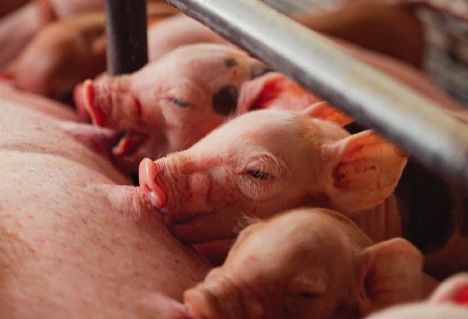
Continual intake of high-quality nutrition is paramount to avoiding the post-weaning production gap. Appetites in weaning animals are often suppressed and need to be stimulated to ensure adequate feed intake for development and growth. Young animals typically prefer sweet tastes, so high-intensity sweeteners provide an effective incentive when switching from liquid diets to solid feed. Research has identified species-specific differences in palatability, where piglets generally show preferences for red berry flavours. To minimise the time to first feed, producers can motivate their animals by improving ration appeal with customised palatants and sweeteners.
Solution spotlight: Sucram sweeteners for piglets
Standard industry practice has traditionally relied on human taste perception to inform animal sweetener formulations. ADM researchers, in collaboration with scientists at the University of Liverpool, are expanding industry knowledge of the function of sweet taste receptors in livestock species. This knowledge informs ADM’s Sucram product line, an in-feed sweetening solution designed specifically for swine. The team developed an in vitro heterologous system of swine sweet taste receptors to generate a database of sweet ingredients for swine. This enabled the creation of sweeteners dedicated entirely to pigs, with specific applications for piglets at weaning.
Among the many compounds and combinations screened in vitro, two stood out for attaining high levels of synergistic activation of the swine sweet taste receptors. These ingredients served as Sucram’s “pig sweet nucleus,” which provides the basis for two new saccharin-free products: Sucram Specifeek and Sucram M’I Sweet. Sucram not only activates the sweet taste receptors T1R2 and T1R3 present on the tongue, thus triggering a sweet taste but also activates the same receptors on the surface of gut enteroendocrine cells, triggering the release of the glucose-like peptide-2 (GLP-2) hormone. This in turn leads to increased absorption of glucose from the intestinal lumen, and the hormone is also notably involved in tissue reparation, increasing blood flow to the gut, fostering gut maturation and integrity, and improving digestion and absorption of nutrients.
CHALLENGE 5
Environmental conditions
The first days and weeks of an animal’s life are marked by heightened sensitivity to fluctuations in their environment, such as temperature, housing conditions and access to clean water. Some species are more at risk when separated from their mother or relocated to a new facility. Certain environmental challenges can impact all animals, irrespective of age. Heat-related stressors constitute one such challenge, which may become increasingly prevalent with climate change. High ambient temperatures can impact an animal’s ability to maintain energetic, thermal, hormonal and mineral balance. In turn, temperatures above the thermal neutral zone can be detrimental to lactation, growth and reproduction across all agriculturally important livestock species.
Solution spotlight: FreshUp for animals under high heat conditions
FreshUp is a tailored nutrition formulation to help limit the negative impact of high-heat conditions on swine. ADM’s customised formulation services create synergistic effects of natural and targeted ingredients that are supplemented in the feed to meet the animal’s daily nutritional needs and help manage heat-related challenges. A blend of plant extracts, organic trace minerals and sweeteners helps improve palatability, ease heat dissipation through vasodilation, and minimise the effects of gut inflammation and the disruption of intestinal integrity.
References are available from the authors on request
Not all products are available in all regions