
Vaccines are a critical baseline of defence for flock health. Science and nature are constantly evolving, and so must the methods with which vaccines are stored and administered. Other factors that impact the process include the vaccine target and the age of the birds.
At the Hatchery
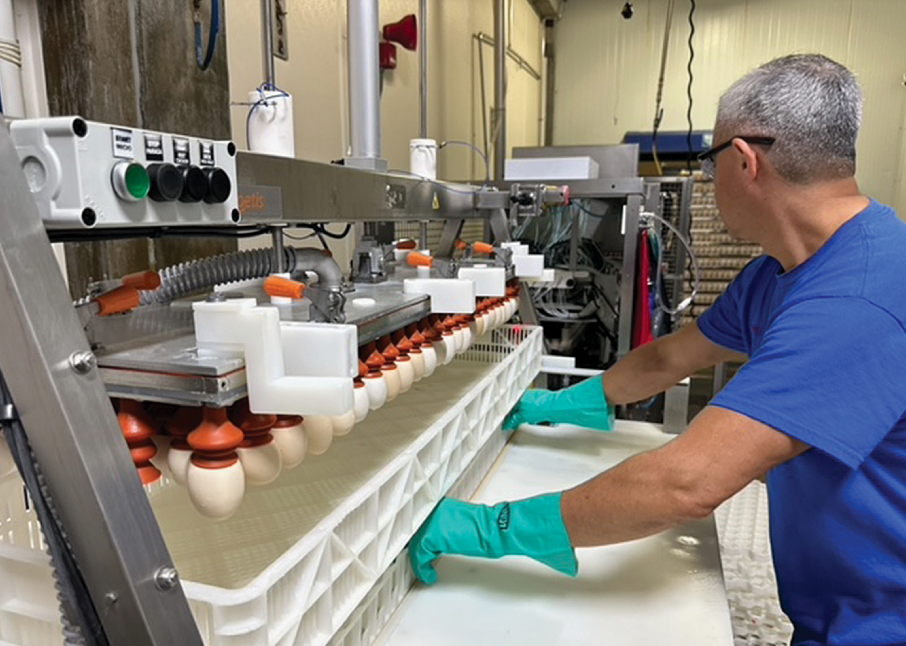
At the hatchery, there are two options for vaccine timing: in-ovo (embryonic developmental days 18–19) or the day of hatch. To inoculate birds at transfer, killed or inactivated viruses or bacteria are injected into the air sack of the egg. The efficiency of the in-ovo vaccination process has improved throughout the years with the introduction of machines to inject a whole tray of eggs simultaneously (pic. 1). Eggs must be trayed properly with the air sack facing up. Malposition eggs will not be vaccinated correctly, resulting in a lack of vaccine efficacy or even embryonic death.
At hatch, chicks may be vaccinated with a subcutaneous injection or a vaccine delivered as a spray.
Spray vaccine uptake may vary for each target. For example, coccidiosis vaccines may be sprayed as a mist or gel directly onto the birds for preening and digestion, while bronchial sprays need to be inhaled to reach the respiratory tract and be effective.
On the Farm
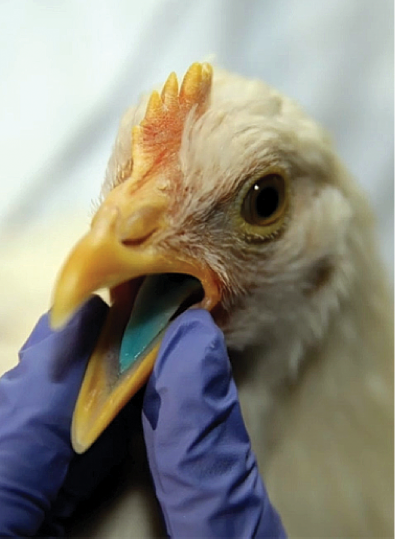
Once out on the farm, there are a few more options for arming flocks against disease. Flocks cannot only be sprayed or vaccinated subcutaneously, but two additional and readily available options are via drinking water or eye drops. Administering vaccines in water lines can be tricky due to water quality. The water cannot contain disinfectants, especially chlorine, as these would inactivate the vaccine. A coloured dye should be added to the vaccine, which will provide caretakers with visual confirmation that the birds are drinking the vaccinated water (pic. 2)
Ocular vaccination is also an option but can be time-consuming. Since this procedure is typically more labour-intensive, it is better suited for smaller flocks as opposed to larger houses.
Shipping and Storing Technology
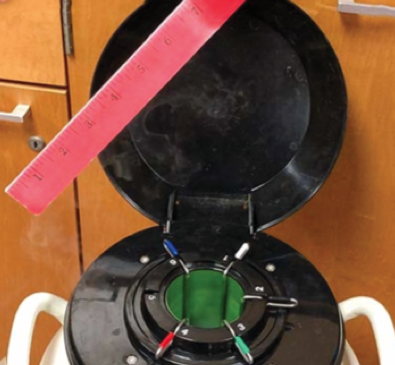
All of these methods are virtually useless if the vaccine is not shipped and stored properly. Storing in the mixing lab can be different depending on the type of vaccine. Some cell-associated live vaccines should be stored in liquid nitrogen tanks. Nitrogen levels need to be checked after each use by dipping a metre stick in the tank and observing the frost line when removed to ensure proper temperatures are maintained (pic. 3).
Other vaccines (freeze-dried, live or inactivated) can be stored in refrigerators or freezers. Monitoring these temperatures is vital but does not have to be expensive, with multiple options readily available. Some manufacturers include freeze indicator tags in the shipping containers to substantiate uninterrupted cold storage. Once at the farm or hatchery, refrigerators or freezers may be equipped with temperature monitors. These monitors can send alerts to associated phone numbers once the temperature inside exceeds certain parameters. This helps minimise vaccine loss in events like power outages.
Vaccine Advancements
Veterinary pharmaceutical companies have been producing more vectored vaccines. Vectored vaccines are vaccines that have had the gene sequence of a pathogen’s antigen inserted into the genome of a non-pathogenic vector or carrier. Vectored vaccines have some advantages over conventional vaccines.
Vectored vaccines:
• Are not inactivated by maternal antibodies.
• Can express one or two antigens from the pathogen, making vaccination distinguishable from a natural infection.
• Can be multivalent, where one vector carries the antigens for several disease agents.
• Are typically cheaper than conventional vaccines.
Conclusion
Every flock is different and comes with its own unique set of challenges, but the vaccination programme does not have to be complicated or expensive. Advancements like vectored vaccines and temperature alarm monitors can reduce or prevent losses in events like disease breaks or catastrophic weather events. It is important to note that a good vaccination programme must be paired with a strong biosecurity programme. Vaccines may not protect birds that are raised in unhygienic conditions.
